



Summary - The 'Kaushal Bodh' (Middle Stage, Grades 6 - 8) and 'Kaushal Vikas' (Secondary Stage, Grades 9 - 10) curricula mark a transformative shift in CBSE education aligned with NEP 2020 and NCF-SE. Helios International School integrates these frameworks to move beyond traditional textbook learning, offering students hands-on, experiential exposure across diverse domains of work. By engaging with real-world projects, students build practical capabilities, environmental awareness, and critical thinking while developing an appreciation for the dignity of labour.
Key Highlights -
- Structured Work Domains: Covers three core areas - Work with Life Forms (nature & sustainability), Work with Machines & Materials (crafts & technology), and Work in Human Services (community & life skills).
- Project-Based Experiential Learning: Replaces rote learning with hands-on projects, such as hydroponics, animation, maker skills, and financial literacy.
- Progressive Growth: 'Kaushal Bodh' introduces foundational work exposure in middle school, paving the way for advanced vocational training in 'Kaushal Vikas' during secondary school.
- Holistic & Future-Ready Skills: Cultivates essential 21st-century competencies, including critical thinking, collaboration, digital literacy, and respect for all forms of work.
The future belongs to children who can think, create, solve problems and adapt with confidence.
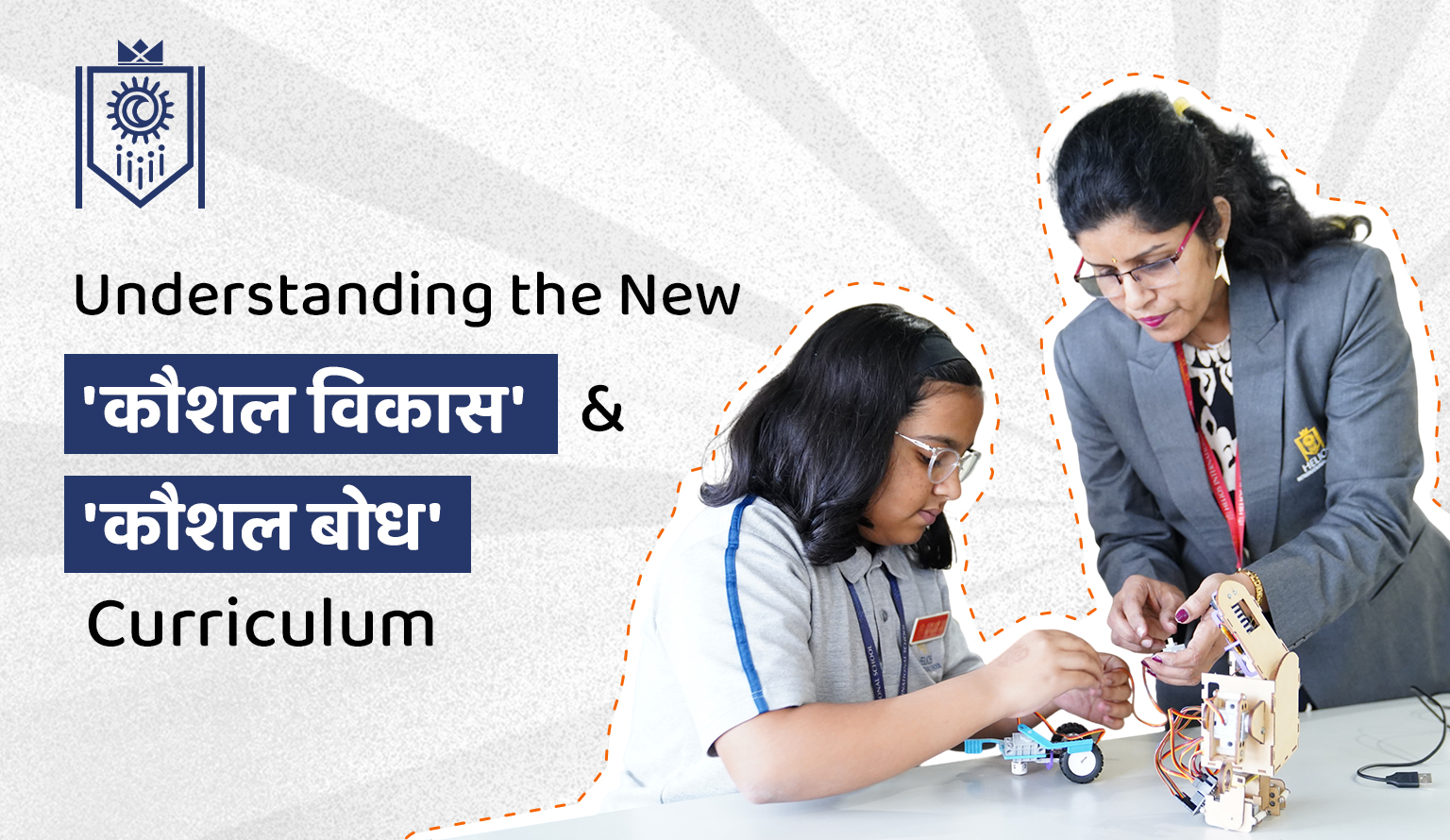
If you've recently been exploring CBSE schools in Pune, you may have come across the terms 'कौशल विकास (Kaushal Vikas)' and 'कौशल बोध (Kaushal Bodh)'. While they may sound like new subjects, they represent CBSE's shift towards skill-based, experiential learning under NEP 2020.
From the academic session 2026–27, Skill Education (Kaushal Bodh) has become mandatory for Classes VI to VIII, while Kaushal Vikas expands skill development and vocational learning in secondary classes.
So, what does this change really mean for your child? More importantly, how can parents choose a school that embraces this new way of learning?
Let's explore.
Why Is CBSE Changing the Way Children Learn?
Think about the skills your child will need 15 years from now.
Will success depend only on remembering textbook answers?
Probably not.
Tomorrow's world will demand individuals who can communicate effectively, solve unfamiliar problems, collaborate with others and continue learning throughout life.
Aligned with NEP 2020, CBSE is bringing this vision to life through Kaushal Bodh and Kaushal Vikas, helping students connect learning with real-life situations.
In short, the question is no longer:
Can my child memorise the answer?
Instead, it has become:
Can my child apply what they know?
What Are 'कौशल बोध' and 'कौशल विकास'?
To make learning more meaningful, CBSE has introduced 'कौशल बोध (Kaushal Bodh)' and 'कौशल विकास (Kaushal Vikas)' under NEP 2020. Although the names sound similar, they play different roles in a child's learning journey.
Kaushal Bodh: Building Awareness Through Experience:
Introduced as mandatory Skill Education for Classes VI to VIII, it engages students in projects and hands-on activities that connect classroom learning with real-life experiences.
Students may explore themes such as:
- Artificial Intelligence & Digital Skills
- Financial Literacy
- Design Thinking
- Entrepreneurship
- Sustainability & Community Projects
The objective is to help children discover their interests, develop curiosity and understand how learning applies in the real world.
Kaushal Vikas: Turning Skills into Competencies:
As students progress to secondary school, Kaushal Vikas integrates vocational education and skill subjects into the curriculum while strengthening essential life skills such as:
- Critical thinking
- Communication
- Collaboration
- Creativity
- Problem-solving
- Leadership
- Decision-making
- Entrepreneurial thinking
In short, Kaushal Bodh introduces children to practical skills, while Kaushal Vikas helps them strengthen and apply those skills with greater confidence. Together, they shift learning from memorising answers to solving real-world problems.
Will This Affect My Child's Academics?
This is one of the most common questions parents ask.
The reassuring answer is NO.
Skill education isn't replacing Mathematics, Science or Languages. Instead, it helps children understand these subjects more meaningfully by experiencing them, not just reading about them.
For ex.
- Learning percentages while preparing a simple household budget.
- Understanding scientific concepts by designing a working model.
Research consistently shows that experiential learning improves engagement, retention and confidence by encouraging students to apply knowledge in authentic contexts.
Why Should Parents Welcome This Change?
Every parent wants their child to grow into a confident, capable individual - and that's exactly what the new CBSE approach aims to nurture:
- Confidence in expressing ideas
- Communication skills
- Creative thinking
- Teamwork
- Practical problem-solving
- Career awareness without early pressure
These qualities prepare students for higher education, careers and everyday life.
Choosing the Right CBSE School Matters More Than Ever
As CBSE embraces Kaushal Bodh and Kaushal Vikas, choosing the right school means looking beyond academic results. It's about choosing a school where children learn by doing, think independently and build skills for life.
When evaluating a school, ask:
- Is skill-based learning part of everyday teaching?
- Do students learn through projects and hands-on experiences?
- Does the school foster creativity, critical thinking and collaboration?
- Are teachers prepared for the new CBSE Skill Education framework?
These questions reveal far more about a school's learning environment than exam results alone.
At Helios International School, the best CBSE schools in Pune, learning is rooted in inquiry and experiential learning, aligned with NEP 2020, helping students build confidence, curiosity and practical skills alongside academic excellence.
Curious to see how skill-based learning comes to life?
Explore the learning experience at Helios International School
.jpeg)