



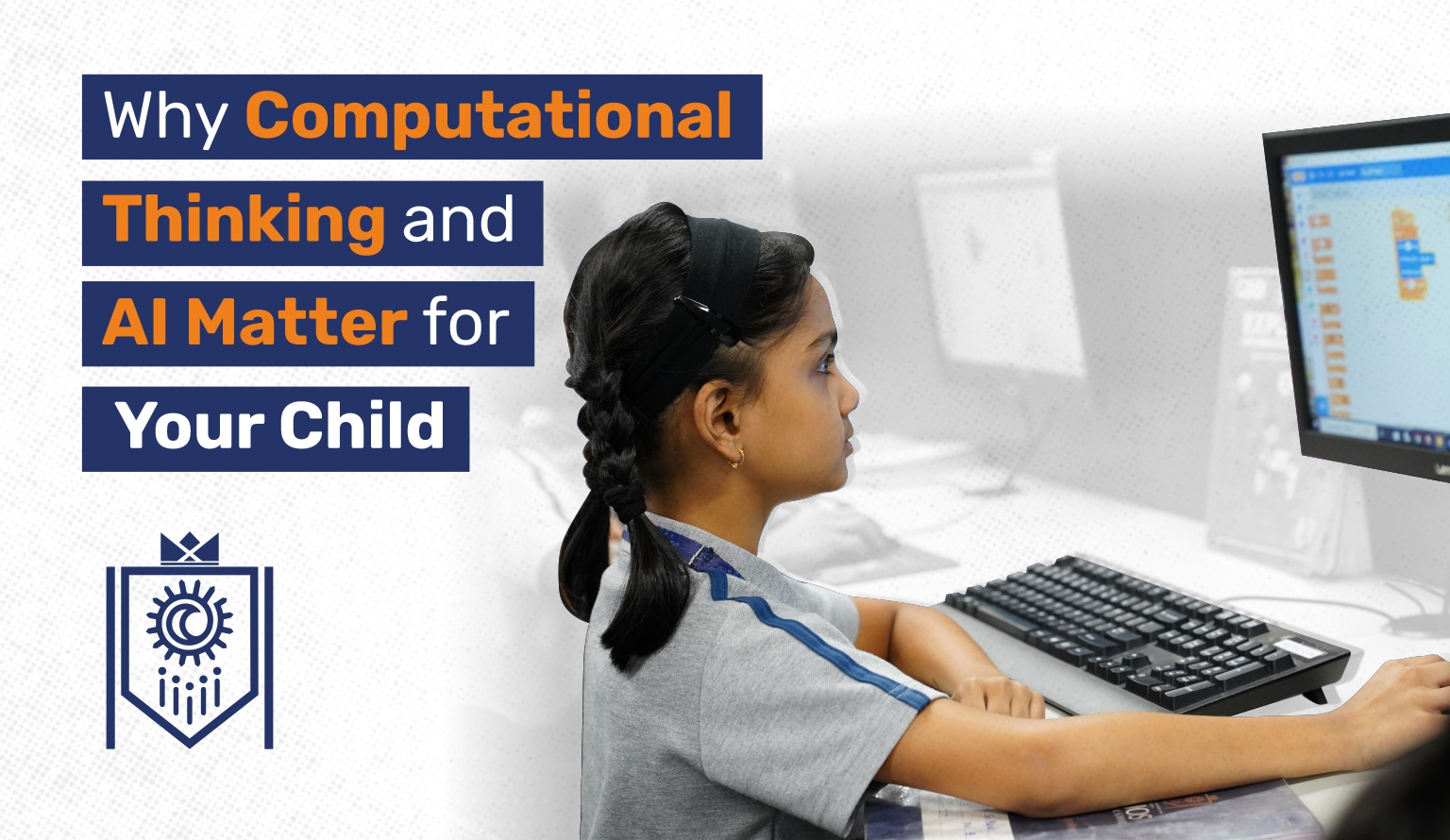
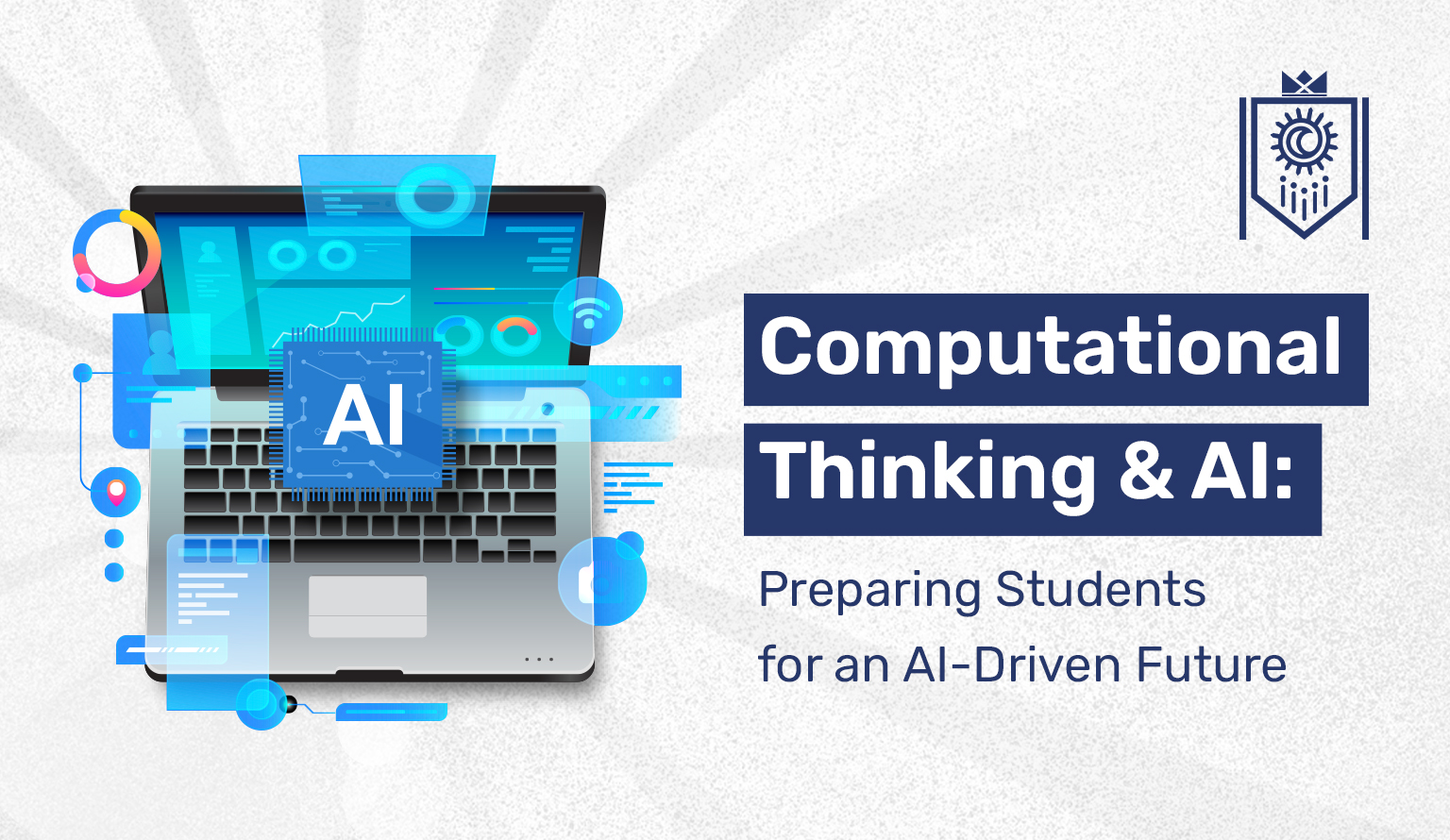
Summary - In today's rapidly evolving digital landscape, computational thinking and AI literacy are essential foundational skills for young learners. Beyond coding, computational thinking teaches children how to decompose complex problems, spot patterns, & design logical solutions - abilities that boost performance across all academic subjects. At Helios International School, we integrate these future-ready concepts into our curriculum to foster critical thinking, creativity, & ethical technology use, ensuring your child is prepared to lead and innovate in an AI-driven world.
A child who can use technology isn't necessarily a child who can think critically about it. In a world where artificial intelligence can generate answers in seconds, the ability to ask the right questions, evaluate information and solve unfamiliar problems matters more than ever.
This is why computational thinking and AI are becoming important conversations in school education. For parents exploring CBSE schools in Pune, understanding this shift means looking beyond digital classrooms to how children learn to reason, experiment, think independently and use technology responsibly.
But what does this change look like in practice, and what should parents look for in their child's school?
NEP 2020: Learning Beyond Memorisation
The National Education Policy (NEP) 2020 advocates experiential, inquiry-based and competency-based learning, encouraging students to understand concepts and apply knowledge rather than simply memorise information.
When children investigate questions, test ideas, and learn from mistakes, they develop curiosity, independent thinking, and the confidence to tackle unfamiliar challenges.
What Is Computational Thinking, and Why Does It Matter?
Computational thinking is a problem-solving approach that involves breaking complex challenges into smaller steps, recognising patterns, analysing information and developing logical solutions. It isn't limited to coding; children can practise it through puzzles, mathematics, science experiments and everyday decisions.
CBSE's 2026-27 framework introduces Computational Thinking and Artificial Intelligence (CT&AI) resources for Classes III-VIII. For Classes IX-X, the 2026-27 scheme includes compulsory CT&AI modules, with CT&AI identified as a compulsory subject from the 2027-28 session.
This makes logical reasoning, digital literacy and problem-solving important considerations for parents comparing the best CBSE schools in Pune.
Connecting AI with Science, Mathematics and Creativity:
AI education becomes more meaningful when children connect concepts across subjects. Mathematics helps them recognise patterns, Science encourages experimentation, and creative projects challenge them to design practical solutions.
Imagine students building a robot that follows a route or designing a model to sort waste. Such projects encourage them to test ideas, learn from failure and collaborate, developing critical thinking alongside technical skills.
At Helios International School, robotics, Artificial Intelligence and science laboratories provide opportunities for hands-on exploration. Explore the campus and facilities to learn more about this practical approach to education.
Teaching Children to Use AI Responsibly:
AI can generate convincing answers, but those answers aren't always accurate or unbiased. Children must learn to question information, verify facts and understand the limits of technology.
Responsible AI education should teach students to:
- Evaluate information: Check AI-generated answers against reliable sources.
- Protect privacy: Understand why personal information must be handled carefully.
- Respect originality: Use AI ethically and acknowledge its role in their work.
- Think independently: Treat technology as a support for reasoning, not a substitute for it.
Teachers guide this process by encouraging discussion, explaining ethical choices and providing age-appropriate learning experiences.
Choosing the Right School for the Future:
When comparing international CBSE schools in Pune, look beyond digital devices. Ask whether children regularly experiment, solve open-ended problems, work in teams and apply classroom knowledge to real-world situations.
A strong learning environment also balances technology with communication, physical activity, creativity and emotional development. At Helios International School, STEM-based learning and interdisciplinary experiences support this broader approach to developing curious, capable learners.
The future needs children who can use AI effectively, think critically, solve problems creatively and make responsible decisions.
.jpeg)